Borda Marianet. Rural Tourism Accommodation VTR-HU-800
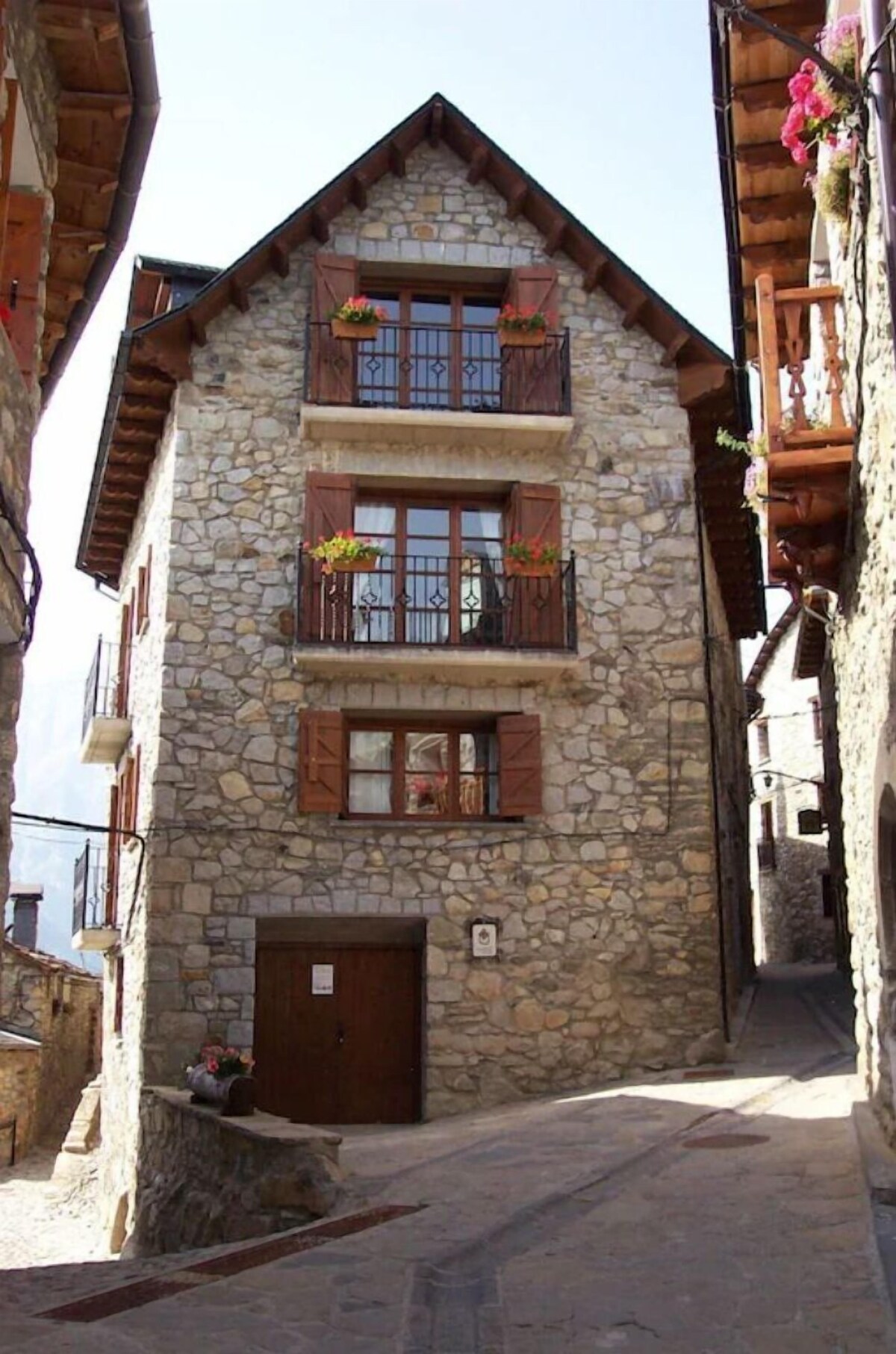
Fantastic, fully equipped apartment located in a recently renovated traditional farmhouse (borda) in the heart of Cerler’s historic center.
* The apartment has three bedrooms: two with double beds and one with a single bed, the latter featuring an extra bed.
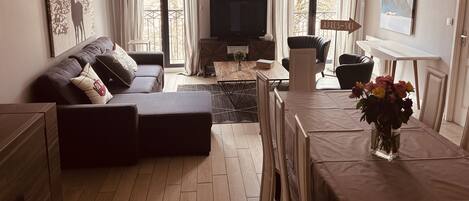
* It features all the amenities needed for a pleasant stay, including bedding, tablecloths, and countless thoughtful touches designed solely for your relaxation.
* The fully equipped kitchen includes a dishwasher, washing machine, refrigerator with freezer, glass-ceramic stove, oven, toaster, coffee maker, microwave, and iron.
* The spacious living room features a TV with a DVD player.
* It has a full bathroom and a half-bath; the latter is located inside one of the double bedrooms.
* Bedding and towels included.
* Pets are not allowed.
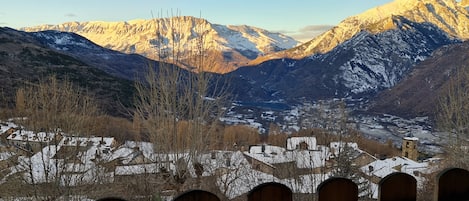
Cerler: The village of Cerler, part of the town of Benasque, existed long before the ski slopes were built. It is first mentioned in the 9th century, but there is very little documentation. This village features numerous noble houses from the 16th century and even earlier periods.
With the creation of the Cerler ski slopes in 1970 (at 1,500 m, the highest village in the Aragonese Pyrenees), its slopes are the best, featuring modern facilities with state-of-the-art snowmaking systems and ski runs winding through pine forests, including the Gallinero run at 2,700 m with a vertical drop of 900 m. There are also cross-country ski trails located in the Llanos del Hospital de Benasque, all set amid a landscape of unparalleled beauty.
High-quality accommodations have been built with minimal impact on the town’s urban structure.
On the road leading to Cerler, there is a beautiful lookout point offering views of Benasque, Eriste, and their surrounding valleys. The village of Cerler features a 16th-century church.
Posets-Maladeta Natural Park: Designated a park in 1994, it covers an area of 33,267 ha with the aim of safeguarding its natural values, vegetation, flora, and geomorphological features. Notable natural landmarks include the thirteen glaciers, covering nearly 350 ha, in the Posets, Perdiguero, and Maladeta massifs.
The park is home to the largest number of peaks exceeding 3,000 m; nature has been generous in its beauty and heights.
Scattered throughout the valley are more than 95 glacial lakes (Cregüeña, Batisiellles, etc.), of varying sizes and characteristics, with numerous waterfalls. The best way to see all the peaks in the park—from Aneto to Posets—is by taking the chairlift that departs from Ampriu, which can be reached via the narrow paved road leading from the village of Cerler.
Benasque is home to the Visitor Center, which features a permanent exhibition showcasing the park’s four main ecosystems: rock, ice and snow; and grasslands and meadows.
The Benasque Valley: The Benasque Valley has the power to captivate any visitor or traveler who ventures in to discover it and ensures a pleasant stay among us, thanks to its customs, folklore, architecture, cuisine, and, of course, its natural surroundings.
In recent decades, Benasque and its surrounding areas have experienced the rebirth of a new culture, based primarily on the service industry—tourism.
A premier tourist destination in Aragon, it is home to the largest number of peaks exceeding 3,000 meters in altitude.
The town of Benasque, at the head of the valley, is situated at an elevation of 1,138 meters. Its population is estimated at around 1,700 registered residents in the municipality (Benasque, Cerler, and Anciles).
Its remoteness has helped preserve its dialect, “El Patués,” a language influenced—due to its proximity—by French, Catalan, and, in any case, Latin. This dialect, which is still spoken today, was once the primary means of communication and is currently the subject of study and preservation efforts.