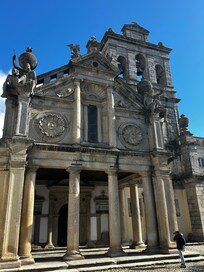
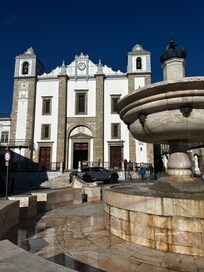
The Historic Center of Évora was designated an UNESCO World Heritage Site in 1986. This area is bounded by the “Vauban” wall, built in the 17th century, and within it lies the “museum city,” which encompasses 20 centuries of history of the peoples and civilizations that have inhabited Évora. There are specific buildings and areas of the city that are designated as having heritage value worthy of protection, such as the facade of our house, which is included on the list of buildings of historical and cultural interest to be preserved. Ebora Home is located on Rua dos Mercadores, in a central area of the former medieval Jewish quarter of the city of Évora. According to historians, between the 14th and 16th centuries, this area was home to a community of about 8,000 people and a range of related services, such as a school, a hospital, an inn for ritual baths, two synagogues, places for reading and interpreting the Bible, and a coffeehouse. Rua dos Mercadores is already mentioned in the first quarter of the 15th century as Rua Direita dos Mercadores (to distinguish it from two other streets also known as Mercadores at the time). It was also known as Rua dos Ferreiros or Rua da Ferraria, which reveals the predominant type of economic activity carried out there.
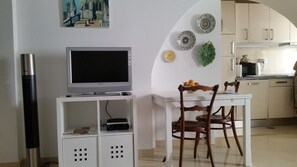
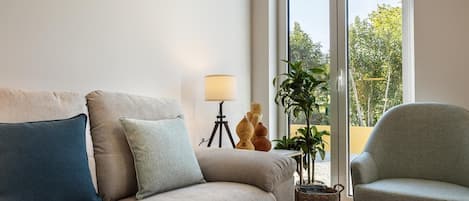
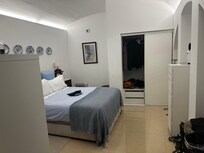
The house is a family heirloom. It was purchased by my grandfather Joaquim in 1914 as an investment property. Two families lived on the first floor, and on the first floor—which had always housed shops and artisan workshops—there were, at that time, three small stores: a fruit stand, a grocery store, and a cobbler’s shop. The architectural restoration project for the building, which began in 2014, created two modern apartments on the first floor while respecting the building’s structural layout and leaving some traditional construction techniques and materials exposed, notably the barrel-vaulted and cradle-vaulted ceilings supported by round arches, the exposed brickwork, the stonework, etc.