
一棟貸し
Oasi del lupo ".La Villa ARTE del Lupo" Jewel in Tuscany near Arezzo
Oasi del lupo ".La Villa ARTE del Lupo" Jewel in Tuscany near Arezzo
Oasi del lupo ".La Villa ARTE del Lupo" Jewel in Tuscany near Arezzoの写真ギャラリー


口コミ
1010段階中10
最高に素晴らしい
おすすめポイント
- ビーチ用品希少 - 海辺で過ごすためのビーチ用品が用意されています。
ベッドルーム 2 室バスルーム 1 室定員 4 名
人気の設備とサービス
- パティオ
- プール
- フィットネスセンター (敷地内)
- 簡易キッチン
- バーベキューグリル
- 冷房
周辺ガイド

Subbiano, Arezzo
- キャッスル オブ ザ フィオライアPlace, キャッスル オブ ザ フィオライア車で 22 分
- カステルヌオーヴォ ディ スッビアーノPlace, カステルヌオーヴォ ディ スッビアーノ車で 25 分
- エキスパートPlace, エキスパート車で 33 分
客室 & ベッド
ベッドルーム 2 室 (定員 4 名)
ベッドルーム 1
ダブルベッド 1 台
ベッドルーム 2
ダブルベッド 1 台
バスルーム 1 室
バスルーム 1
石鹸 · タオルあり · トイレ · シャワーのみ · ヘアドライヤー
その他のスペース
テラスまたはパティオ
キッチン
簡易キッチン
庭園
ダイニングスペース
この施設について
Oasi del lupo ".La Villa ARTE del Lupo" Jewel in Tuscany near Arezzo
Welcome to our hidden gem in Tuscany! Our beautiful retreat offers the perfect combination of art and relaxation under one roof. Come and relax in our peaceful oasis and unwind.
The villa has four cuddly golden retrievers whose gentle nature will make you forget everyday life. 4000 sqm garden with pool in a fantastic panoramic location. The pool house is on the grounds of "La Villa ARTE del Lupo"
Subbiano is in the middle of the most important sights and is therefore perfect for day trips to many famous cities, such as Florence, Siena, Pisa, Volterra, Montepulciano, Perugia,
Lake Trasimeno, Castiglione del Lago, Citta di Castello. Drive to the famous Val di Chiana. Visit La Villa with its delicacies. All of these dream destinations can be reached in between 15 minutes and 1.5 hours.
Anyone who has a dream should go to Italy.
It doesn't matter if you think the dream is dead and buried,
in Italy it will rise again and come true
(Elizabeth Spencer)
The Villa del ARTE del Lupo – Not just a place to stay…
FROM WAYNE ANTHONY-08-2024
Nestled atop the rolling hills of Tuscany, the Villa del ARTE del Lupo offers not only a relaxing place to
stay, but a place where history, art, and mysticism converge in a glimpse of Italy’s historic past. The
property has served various purposes over its long life: a rest stop for travelers, a religious retreat, an
extensive family home, and now a place for guests to experience the beauty of Tuscany. While enjoying
a relaxing stay, however, guests should make time to explore the unique grounds, which, with open
eyes, give the keen observer a chance to explore a slice of the unique two-thousand year history of the
Italian countryside.
For the curious, consider a simple stroll around the property. Terraces carefully cut into the land provide
level areas for agriculture. Massive fig trees and orchards once offered fruit in their season. Cisterns,
now dry, attest to hidden Roman engineering. Traces of ancient lanes lead to hidden groves, pavilions,
and bowers, lost to the mysteries of time.
In fact, the approach to the Villa is one of the primary roads of ancient Rome, the Via Romea Germanica.
Around 1236 AD, this way transformed into a religious pilgrimage route linking Stade, Germany in the
north to the Vatican at Rome in the south. This historic road passes directly in front of the main Villa,
bisecting the land. Today, it is marked with two historical markers citing the mileage to either terminus.
Approaching the Villa from the south on this road and traveling up the hill, the land is lined with several
vineyards, fruit groves, and farms which originally provided food for the estate above. Aging
outbuildings still remain gently slipping away, a testament to effects of time. Small access lanes, now
wildly overgrown, wind away and lead to places long forgotten. As the house nears, on the left a storage
area, erected by a former owner, boasts stacked remains of historic stone work rescued from the
surrounding countryside. Upon arrival at the Villa, four unique markers clearly delineate the beginning
of the main compound.
The first of these sits to the right of the road, a large, arch-shaped stone. Protruding from its flat face, a
carved relief of an unknown pagan deity stands sentinel. Its features have been brutally defaced,
possibly in the Middle Ages, when the site was transformed from a pagan wayside to a Christian
nunnery, but its placement is clear. Even the early Romans sought the gods’ protection of their land.
On the left, across from the stone marker, sits the corner wall of the main entrance. Herein is set a
definitive reminder of the Christian conversion. An icon of Michael the Archangel defeating the Dragon
of Evil (Revelation 12:7 in the Bible), proclaims a notice of divine protection--no evil dare enter this
sacred site. In his hands, Michael wields a sword of victory and holds the scales of justice weighing the
hearts of all. His foot crushes the head of the defeated dragon.
Before the shrine is placed a kneeling plinth for prayer. To the right, a candle nook offers light to the way
of the pilgrims. Within the nook is the seal of the Grand Master of the Knight’s Templar, showing their
approval and use of the land as a safe haven for pilgrims. A Templer Knight with shield rides his steed;
circling is the Templar motto: Cristi sigillum militum (Seal of the Soldiers of Christ). Above, inscribed in
the plaster work, are the words “Io credo” (I believe). To the right of this sits an ambiguous symbol--a
circle with four petals, possibly a Greek Chi (the symbol of Christ) or a marker of the four Gospels
(Matthew, Mark, Luke, and John).
Continuing down the wall to the left of the icon, is another pair of markers. First, a half circle niche
which most likely held a statue of a local pagan god, is now bricked over. Then, a fresco triumvirate of
three women bathing naked in a spring, possibly water nymphs, is beside. In the far background of the
fresco, a depiction of the Villa can be seen. This enigmatic artwork stands in direct opposition to its
Christian neighbors--that is until entering the property through the passage just beside. Behind, not fifty
feet from the image is a well, a sacred spring. The fresco is a beacon for travelers on the road that there
is water for the thirsty weary available. This wellspring is likely an outlet of another amazing feature of
this property: through a variety of hidden underground waterways, the entire complex is feed water
directly from a hidden lake further up the hill
Finally, moving another twenty feet further down the entrance wall, is a final historical feature. Built
into the wall are the durchreiche, or ‘pass throughs.’ These two large, brick-lined circular openings date
from the time the property housed a cloistered nunnery. They allowed the surrounding community to
bring supplies to the Order, and pass these through to those cloistered and secluded within.
From this point, returning the Via Romane, the property unfolds. A tall stone wall lines the road to the
right. This creates a terrace on the hill above upon which sets the various buildings of the main property.
This wall opens to a car park beyond which and below lies a terraced planting area which most likely
served as kitchen garden for the medieval nunnery. Above this terrace, across the Roman road, is an
area which formed a meditation garden (not accessible as a part of the current property).
The rest of the complex consists of a sprawling number of buildings which have been adapted and
adorned by the work of the last previous owner. The grounds sport stoneware salvaged from the
surrounding countryside. Animals, water basins, and reclaimed building materials are artistically
incorporated everywhere and are worth a careful examination. Cast a glance upward as well, as the
stonework is even incorporate into the chimneys and roof features.
Finally, the four corners of main house’s eave are adorned with metal lilies, the symbol of
Easter—resurrection, hope, rebirth and blessing. This seems a curious addition until entering the
house’s kitchen. Just inside, a nook houses a painted icon of Mary holding Jesus. She keeps watch over
all who enter, and in his hands, the Christ Child holds a sprig of lilies, clearly the symbol of His blessing
and favor upon the house and all who enter.
Host:
Tammy and Ulli
About us
"Having fun in life is the best cosmetic for a woman."
Tammy a strong, beautiful woman at Ulli's side
Press release ULRICH HM WOLF:
Paris Hilton, Londonbeat, Natascha Wright (La Bouche) Thomas Anders, Weathergirls, Markus, Marjike Amado, Udo Jürgens and many others have been in front of the camera in his model villa in Taunusstein/Hessen and now Subbiano in Tuscany - that's where he likes to work most after his many travels. "The special, slow-paced, concentrated atmosphere in my refuge is often the basis for the extraordinary moment that needs to be shown," emphasizes photo psychologist and people expert Ulrich HM Wolf, who is unusually reserved for the media environment. A big city is not an option for his home base. After arriving from Berlin, London, NY, Milan, etc., it quickly becomes clear to everyone who comes for the first time: the warm atmosphere is unique and visible.?
The latest creation is called FACES - unique art portraits of predominantly famous faces.
The villa has four cuddly golden retrievers whose gentle nature will make you forget everyday life. 4000 sqm garden with pool in a fantastic panoramic location. The pool house is on the grounds of "La Villa ARTE del Lupo"
Subbiano is in the middle of the most important sights and is therefore perfect for day trips to many famous cities, such as Florence, Siena, Pisa, Volterra, Montepulciano, Perugia,
Lake Trasimeno, Castiglione del Lago, Citta di Castello. Drive to the famous Val di Chiana. Visit La Villa with its delicacies. All of these dream destinations can be reached in between 15 minutes and 1.5 hours.
Anyone who has a dream should go to Italy.
It doesn't matter if you think the dream is dead and buried,
in Italy it will rise again and come true
(Elizabeth Spencer)
The Villa del ARTE del Lupo – Not just a place to stay…
FROM WAYNE ANTHONY-08-2024
Nestled atop the rolling hills of Tuscany, the Villa del ARTE del Lupo offers not only a relaxing place to
stay, but a place where history, art, and mysticism converge in a glimpse of Italy’s historic past. The
property has served various purposes over its long life: a rest stop for travelers, a religious retreat, an
extensive family home, and now a place for guests to experience the beauty of Tuscany. While enjoying
a relaxing stay, however, guests should make time to explore the unique grounds, which, with open
eyes, give the keen observer a chance to explore a slice of the unique two-thousand year history of the
Italian countryside.
For the curious, consider a simple stroll around the property. Terraces carefully cut into the land provide
level areas for agriculture. Massive fig trees and orchards once offered fruit in their season. Cisterns,
now dry, attest to hidden Roman engineering. Traces of ancient lanes lead to hidden groves, pavilions,
and bowers, lost to the mysteries of time.
In fact, the approach to the Villa is one of the primary roads of ancient Rome, the Via Romea Germanica.
Around 1236 AD, this way transformed into a religious pilgrimage route linking Stade, Germany in the
north to the Vatican at Rome in the south. This historic road passes directly in front of the main Villa,
bisecting the land. Today, it is marked with two historical markers citing the mileage to either terminus.
Approaching the Villa from the south on this road and traveling up the hill, the land is lined with several
vineyards, fruit groves, and farms which originally provided food for the estate above. Aging
outbuildings still remain gently slipping away, a testament to effects of time. Small access lanes, now
wildly overgrown, wind away and lead to places long forgotten. As the house nears, on the left a storage
area, erected by a former owner, boasts stacked remains of historic stone work rescued from the
surrounding countryside. Upon arrival at the Villa, four unique markers clearly delineate the beginning
of the main compound.
The first of these sits to the right of the road, a large, arch-shaped stone. Protruding from its flat face, a
carved relief of an unknown pagan deity stands sentinel. Its features have been brutally defaced,
possibly in the Middle Ages, when the site was transformed from a pagan wayside to a Christian
nunnery, but its placement is clear. Even the early Romans sought the gods’ protection of their land.
On the left, across from the stone marker, sits the corner wall of the main entrance. Herein is set a
definitive reminder of the Christian conversion. An icon of Michael the Archangel defeating the Dragon
of Evil (Revelation 12:7 in the Bible), proclaims a notice of divine protection--no evil dare enter this
sacred site. In his hands, Michael wields a sword of victory and holds the scales of justice weighing the
hearts of all. His foot crushes the head of the defeated dragon.
Before the shrine is placed a kneeling plinth for prayer. To the right, a candle nook offers light to the way
of the pilgrims. Within the nook is the seal of the Grand Master of the Knight’s Templar, showing their
approval and use of the land as a safe haven for pilgrims. A Templer Knight with shield rides his steed;
circling is the Templar motto: Cristi sigillum militum (Seal of the Soldiers of Christ). Above, inscribed in
the plaster work, are the words “Io credo” (I believe). To the right of this sits an ambiguous symbol--a
circle with four petals, possibly a Greek Chi (the symbol of Christ) or a marker of the four Gospels
(Matthew, Mark, Luke, and John).
Continuing down the wall to the left of the icon, is another pair of markers. First, a half circle niche
which most likely held a statue of a local pagan god, is now bricked over. Then, a fresco triumvirate of
three women bathing naked in a spring, possibly water nymphs, is beside. In the far background of the
fresco, a depiction of the Villa can be seen. This enigmatic artwork stands in direct opposition to its
Christian neighbors--that is until entering the property through the passage just beside. Behind, not fifty
feet from the image is a well, a sacred spring. The fresco is a beacon for travelers on the road that there
is water for the thirsty weary available. This wellspring is likely an outlet of another amazing feature of
this property: through a variety of hidden underground waterways, the entire complex is feed water
directly from a hidden lake further up the hill
Finally, moving another twenty feet further down the entrance wall, is a final historical feature. Built
into the wall are the durchreiche, or ‘pass throughs.’ These two large, brick-lined circular openings date
from the time the property housed a cloistered nunnery. They allowed the surrounding community to
bring supplies to the Order, and pass these through to those cloistered and secluded within.
From this point, returning the Via Romane, the property unfolds. A tall stone wall lines the road to the
right. This creates a terrace on the hill above upon which sets the various buildings of the main property.
This wall opens to a car park beyond which and below lies a terraced planting area which most likely
served as kitchen garden for the medieval nunnery. Above this terrace, across the Roman road, is an
area which formed a meditation garden (not accessible as a part of the current property).
The rest of the complex consists of a sprawling number of buildings which have been adapted and
adorned by the work of the last previous owner. The grounds sport stoneware salvaged from the
surrounding countryside. Animals, water basins, and reclaimed building materials are artistically
incorporated everywhere and are worth a careful examination. Cast a glance upward as well, as the
stonework is even incorporate into the chimneys and roof features.
Finally, the four corners of main house’s eave are adorned with metal lilies, the symbol of
Easter—resurrection, hope, rebirth and blessing. This seems a curious addition until entering the
house’s kitchen. Just inside, a nook houses a painted icon of Mary holding Jesus. She keeps watch over
all who enter, and in his hands, the Christ Child holds a sprig of lilies, clearly the symbol of His blessing
and favor upon the house and all who enter.
Host:
Tammy and Ulli
About us
"Having fun in life is the best cosmetic for a woman."
Tammy a strong, beautiful woman at Ulli's side
Press release ULRICH HM WOLF:
Paris Hilton, Londonbeat, Natascha Wright (La Bouche) Thomas Anders, Weathergirls, Markus, Marjike Amado, Udo Jürgens and many others have been in front of the camera in his model villa in Taunusstein/Hessen and now Subbiano in Tuscany - that's where he likes to work most after his many travels. "The special, slow-paced, concentrated atmosphere in my refuge is often the basis for the extraordinary moment that needs to be shown," emphasizes photo psychologist and people expert Ulrich HM Wolf, who is unusually reserved for the media environment. A big city is not an option for his home base. After arriving from Berlin, London, NY, Milan, etc., it quickly becomes clear to everyone who comes for the first time: the warm atmosphere is unique and visible.?
The latest creation is called FACES - unique art portraits of predominantly famous faces.
日付を指定して料金を検索
類似した宿泊施設

Farmhouse in Tuscany with Pool & Valley Views
Poppi
Farmhouse in Tuscany with Pool & Valley Views
Poppi
- プール
- キッチン
- 洗濯機
- WiFi (無料)
10 段階中 10.0、最高に素晴らしい、(10 件の口コミ) 件の口コミ
10/10
最高に素晴らしい
(10 件の口コミ)

Castagno-Gemme del Casentino
Castel Focognano
Castagno-Gemme del Casentino
Castel Focognano
- プール
- キッチン
- WiFi (無料)
- 冷房
10 段階中 10.0、最高に素晴らしい、(1 件の口コミ) 件の口コミ
10/10
最高に素晴らしい
(1 件の口コミ)

公園とプライベートプール付きの美しい丘にあるCASALE Toscano、2トリプルルーム
Anghiari
公園とプライベートプール付きの美しい丘にあるCASALE Toscano、2トリプルルーム
Anghiari
- プール
- WiFi (無料)
- 駐車場利用可
- ランドリー
10 段階中 10.0、最高に素晴らしい、(29 件の口コミ) 件の口コミ
10/10
最高に素晴らしい
(29 件の口コミ)

Elegant Countryside Retreat
Città di Castello
Elegant Countryside Retreat
Città di Castello
- プール
- キッチン
- ペット可
- WiFi (無料)
10 段階中 9.4、最高に素晴らしい、(29 件の口コミ) 件の口コミ
9.4/10
最高に素晴らしい
(29 件の口コミ)

Il Moro-Gemme del Casentino
Castel Focognano
Il Moro-Gemme del Casentino
Castel Focognano
- プール
- キッチン
- WiFi (無料)
- 冷房
10 段階中 10.0、最高に素晴らしい、(1 件の口コミ) 件の口コミ
10/10
最高に素晴らしい
(1 件の口コミ)

Private Villa with private pool, A/C, WIFI, TV, patio, pets allowed, panoramic view, close to Arezzo
Pergine Valdarno
Private Villa with private pool, A/C, WIFI, TV, patio, pets allowed, panoramic view, close to Arezzo
Pergine Valdarno
- プール
- キッチン
- 洗濯機
- ペット可
10 段階中 10.0、最高に素晴らしい、(51 件の口コミ) 件の口コミ
10/10
最高に素晴らしい
(51 件の口コミ)

Terrazzina is a charming flat in the hamlet of Castello di Montozzi
Toscana
Terrazzina is a charming flat in the hamlet of Castello di Montozzi
Toscana
- プール
- キッチン
- 洗濯機
- ペット可
10 段階中 10.0、最高に素晴らしい、(1 件の口コミ) 件の口コミ
10/10
最高に素晴らしい
(1 件の口コミ)

専用の入り口、広い庭、スイミングプールがあるROSAのアパートメント。
Pergine Valdarno
専用の入り口、広い庭、スイミングプールがあるROSAのアパートメント。
Pergine Valdarno
- プール
- キッチン
- 洗濯機
- ペット可
10 段階中 10.0、最高に素晴らしい、(1 件の口コミ) 件の口コミ
10/10
最高に素晴らしい
(1 件の口コミ)

Gorgeous home in Bibbiena
Bibbiena
Gorgeous home in Bibbiena
Bibbiena
- プール
- キッチン
- ペット可
- WiFi (無料)
10 段階中 10.0、最高に素晴らしい、(1 件の口コミ) 件の口コミ
10/10
最高に素晴らしい
(1 件の口コミ)

Appartamento GIALLO美しいトスカーナの典型的な農家の庭園
Pergine Valdarno
Appartamento GIALLO美しいトスカーナの典型的な農家の庭園
Pergine Valdarno
- プール
- キッチン
- 洗濯機
- ペット可
10 段階中 10.0、最高に素晴らしい、(3 件の口コミ) 件の口コミ
10/10
最高に素晴らしい
(3 件の口コミ)

Borgo dei Corsi - VERGAIO 6 Apartment
Raggiolo
Borgo dei Corsi - VERGAIO 6 Apartment
Raggiolo
- プール
- 朝食付き
- キッチン
- 洗濯機
10 段階中 9.4、最高に素晴らしい、(17 件の口コミ) 件の口コミ
9.4/10
最高に素晴らしい
(17 件の口コミ)

Farmhouse near Nightlife
Terranova Bracciolini, Arezzo
Farmhouse near Nightlife
Terranova Bracciolini, Arezzo
- プール
- キッチン
- 洗濯機
- ペット可
10 段階中 9.8、最高に素晴らしい、(11 件の口コミ) 件の口コミ
9.8/10
最高に素晴らしい
(11 件の口コミ)

カサバカンツェ-カサディピエトロアレチノ、アレッツォの中心部
アレッツォ・チェントロ・ストリコ
カサバカンツェ-カサディピエトロアレチノ、アレッツォの中心部
アレッツォ・チェントロ・ストリコ
- キッチン
- 洗濯機
- ペット可
- WiFi (無料)
10 段階中 10.0、最高に素晴らしい、(12 件の口コミ) 件の口コミ
10/10
最高に素晴らしい
(12 件の口コミ)

Awesome home in Talla with WiFi
Talla
Awesome home in Talla with WiFi
Talla
- キッチン
- 洗濯機
- ペット可
- WiFi (無料)
10 段階中 9.0、とても素晴らしい、(2 件の口コミ) 件の口コミ
9.0/10
とても素晴らしい
(2 件の口コミ)
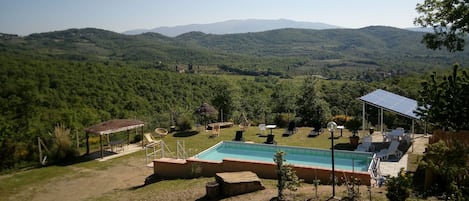
Private Villa with private pool, A/C, WIFI, TV, patio, pets allowed, panoramic view, close to Arezzo
Pieve San Giovanni
Private Villa with private pool, A/C, WIFI, TV, patio, pets allowed, panoramic view, close to Arezzo
Pieve San Giovanni
- プール
- キッチン
- 洗濯機
- ペット可
10 段階中 9.2、とても素晴らしい、(10 件の口コミ) 件の口コミ
9.2/10
とても素晴らしい
(10 件の口コミ)

Beautiful apartment for 6 people with WIFI, pool, TV and pets allowed, close to Arezzo
Capolona
Beautiful apartment for 6 people with WIFI, pool, TV and pets allowed, close to Arezzo
Capolona
- キッチン
- 洗濯機
- ペット可
- WiFi (無料)
10 段階中 10.0、最高に素晴らしい、(2 件の口コミ) 件の口コミ
10/10
最高に素晴らしい
(2 件の口コミ)

Casale Elisaは、丘陵地に建つ魅力的なカントリーハウスです。
Arezzo
Casale Elisaは、丘陵地に建つ魅力的なカントリーハウスです。
Arezzo
- プール
- キッチン
- 洗濯機
- 屋外スペース
10 段階中 8.0、とても良い、(1 件の口コミ) 件の口コミ
8.0/10
とても良い
(1 件の口コミ)

Casa La Ciucola、緑に囲まれた2つの家族のための素朴な石
Raggiolo (Ar)
Casa La Ciucola、緑に囲まれた2つの家族のための素朴な石
Raggiolo (Ar)
- プール
- ホットタブ
- キッチン
- 洗濯機
10 段階中 9.6、最高に素晴らしい、(4 件の口コミ) 件の口コミ
9.6/10
最高に素晴らしい
(4 件の口コミ)

Charming Tuscan Farmhouse
Ortignano
Charming Tuscan Farmhouse
Ortignano
- プール
- ペット可
- 駐車場利用可
- ランドリー
10 段階中 10.0、最高に素晴らしい、(11 件の口コミ) 件の口コミ
10/10
最高に素晴らしい
(11 件の口コミ)
ハウスルール
チェックイン : 16:00 以降
代表者の最低年齢 : 18 歳
チェックアウト : 12:30 より前
お子様
大人限定
イベント
イベント不可
ペット
ペットとの宿泊不可
喫煙
喫煙可 : 指定エリア内
重要事項
ご宿泊に際して
施設の登録番号 : IT051002C235ZRT9KL
施設番号 : 5538102
施設の定める利用規約に従って、追加ゲスト料金がかかる場合があります
場合により、チェックイン時に政府発行の写真付き身分証明書と付随費用精算のためのクレジットカード / デビットカードのご提示、または現金でのデポジットのお支払いが必要です
宿泊施設への要望は、チェックイン時の状況によりご希望に添えない場合があり、内容によっては追加料金が発生することがあります。対応は確約ではございませんのでご了承ください
敷地内でのパーティーやグループイベントの開催は固く禁止されています
施設における一酸化炭素検知器の有無について、オーナーから情報提供はありません。ポータブル検知器の持ち込みをご検討ください
オーナーによると、施設に煙感知器があるとのことです
周辺地域について
スッビアーノ
このヴィラは、スッビアーノの川沿いにあり、田園地域に位置しています。キャッスル オブ ザ フィオライアとカステルヌオーヴォ ディ スッビアーノは、地域を代表する観光スポット。また、ラヴァーニ・オイル・ミルやファットリア・ラ・ヴィアッラも人気があります。

Subbiano, Arezzo
周辺情報
- キャッスル オブ ザ フィオライア - 車で 22 分 - 8.9 km
- カステルヌオーヴォ ディ スッビアーノ - 車で 25 分 - 10.4 km
- エキスパート - 車で 33 分 - 21.3 km
- アレッツォ馬術センター - 車で 50 分 - 32.4 km
- グランデ広場 - 車で 53 分 - 24.1 km
交通案内
- スッビアーノ駅から車で 14 分
- ペレトラ空港 (FLR)から車で 94 分
レストラン
- Antico Posto di Ristoro - 車で 47 分
- Buca di Michelangelo - 車で 51 分
- La Corte dell'Oca - 車で 30 分
- Ristorante Il Rifugio - 車で 53 分
- Ristorante Il Cerro - 車で 50 分
よくあるご質問
Oasi del lupo ".La Villa ARTE del Lupo" Jewel in Tuscany near Arezzoにプールはありますか ?
はい、この宿泊施設には屋外プールがあります。
Oasi del lupo ".La Villa ARTE del Lupo" Jewel in Tuscany near Arezzoの宿泊料金はどのくらいですか ?
2026 年 10 月 13 日 現在、2027 年 2 月 11 日 に大人 2 名でOasi del lupo ".La Villa ARTE del Lupo" Jewel in Tuscany near Arezzoに 1 泊した場合の最低料金は ¥38,301 (税およびサービス料別) です。この料金は、今後 30 日間の 1 泊あたりの料金において過去 24 時間に見つかった最低料金に基づいています。料金は変更される場合があります。ご希望の日付を入力して、正確な料金をご確認ください。
Oasi del lupo ".La Villa ARTE del Lupo" Jewel in Tuscany near Arezzoはペットと宿泊できますか ?
いいえ、ペットは同伴できません。
Oasi del lupo ".La Villa ARTE del Lupo" Jewel in Tuscany near Arezzoの駐車料金はいくらですか ?
施設内駐車場をご利用いただけます。
Oasi del lupo ".La Villa ARTE del Lupo" Jewel in Tuscany near Arezzoのチェックインは何時ですか ?
チェックイン開始は 16:00 です。
Oasi del lupo ".La Villa ARTE del Lupo" Jewel in Tuscany near Arezzoのチェックアウトは何時ですか ?
チェックアウトは 12:30 です。
Oasi del lupo ".La Villa ARTE del Lupo" Jewel in Tuscany near Arezzoはどこにありますか ?
川沿いにあるこのヴィラは、アルノ川から 2.9 km、キャッスル オブ ザ フィオライアおよびカステルヌオーヴォ ディ スッビアーノから 15 km 圏内です。サン マルティーノ ソプラルノ教会およびモンティ・ロニョージ自然保護区も 20 km 圏内です。
オーナーについて
オーナー : Ulrich Wolf
言語 :
英語, ドイツ語
弊社サービスについてご意見をお聞かせくださいご意見の送信