The Loft Area
The loft area is the architectural heart of the apartment. It is made up of two large, open, connected spaces set on different levels. This change in height gives the apartment its rhythm, depth, and character, while keeping the flow natural and open.
You move easily from one area to the next, almost like walking through an interior urban space where each section has its own purpose, atmosphere, and presence.
Entrance and First Loft Section
The entrance opens into the first section of the loft. This area includes the living room and also serves as the access point to the closed bedrooms. It has a lower, more intimate and enveloping feel, while still remaining connected to the rest of the apartment.
Living Room
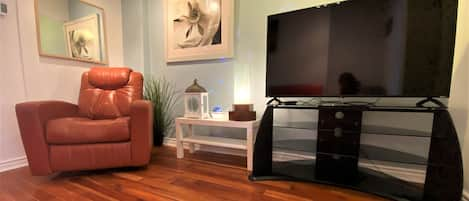
The living room is located in this first loft section. It is comfortable and open, but it can also be partially closed off to become an additional sleeping area. It works just as well as a place to relax as it does as a flexible night space, while keeping the lively, adaptable spirit of the loft.
A quality sound system is also available in the living room, making it easy to enjoy music and add extra depth to the atmosphere.
Closed Bedrooms
The bedrooms are accessed from the entrance and living room area. They offer real privacy, which is especially valuable in an apartment with such a large open loft space. Guests can enjoy the dramatic shared areas while still having proper closed rooms for sleeping.
Bedroom with Balcony
One of the closed bedrooms has a balcony overlooking the street corner. This gives the room a direct connection to the neighbourhood and its movement, while still preserving the privacy of a separate bedroom. It has a more urban feel, connected to the energy of the street.
Raised Loft Area
The raised section brings together the kitchen, dining area, counter area, and flexible mixed-use space. This is the most social part of the loft: a place to cook, eat, talk, work, have coffee, or keep the evening going.
It also gives access to the large bathroom with hammam and to the terrace, making it one of the most practical, lively, and central areas of the apartment.
Kitchen
The kitchen is fully integrated into the raised loft area. It is not hidden away or isolated: it is part of the overall atmosphere of the space. Functional, open, and urban, it allows you to prepare a meal while staying connected to the dining area, the counter, and the surrounding living space.
Dining Area
The dining area flows naturally from the kitchen and counter area. It is simple, warm, and inviting, designed for quiet meals as much as for long conversations. It benefits from the openness of the loft without feeling stiff or overly formal.
Counter Area
The counter area adds a practical and spontaneous touch to the raised space. It is perfect for having coffee, putting down a drink, preparing something quickly, or simply staying connected to the movement of the kitchen and dining area. It reinforces the loft’s friendly, urban character.
Flexible Space
The flexible space, located in the raised section, can be used in different ways depending on your needs: as a reading corner, a work area, a transition space, or simply a quiet spot to settle in. It adds versatility without taking away from the open loft feeling.
Terrace
The terrace is accessed from the raised loft area and naturally extends the interior living space outdoors. It is a place to get some air, enjoy a coffee, sit for a while, or end the day outside while still feeling connected to the energy of the loft.
Bathroom with Hammam
Accessible from the raised loft area, the large bathroom with hammam is one of the apartment’s most distinctive features. This is not just a decorative extra, but a true experience of warmth, steam, and relaxation.
The hammam creates its own enveloping space, designed to slow down, warm up, disconnect, and give the stay a more sensory dimension.
The Building
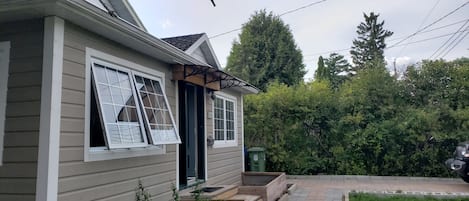
From the outside, the building is simple and modest, with unpretentious common areas, like many older urban buildings in Montreal. But it has a unique history: the current building actually brings together two former separate buildings that are now connected.
This configuration explains some of the loft’s most distinctive features, including the changes in level inside and the presence of separate building accesses. These accesses are not presented as everyday entrances, but they help make the space feel well organized and reassuring, with clear and easy-to-identify exits.
The ground floor is occupied by small commercial spaces and offices, while the residential portion upstairs is limited to only two apartments. The loft therefore has a more intimate atmosphere than a large residential building, with very good sound insulation.
Once inside, the contrast reveals itself naturally: a spacious, bright, and warm place whose character comes precisely from its slightly unusual history.